
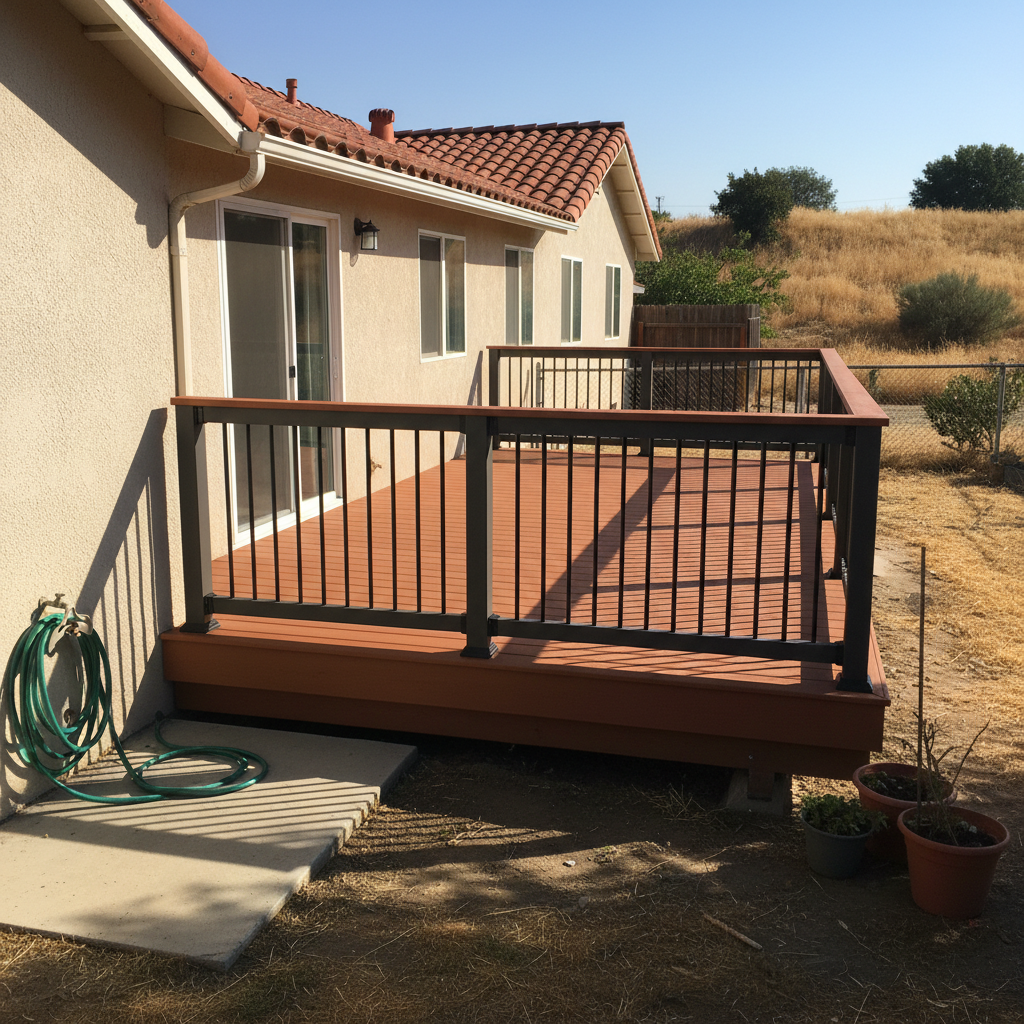
Most people shopping for a deck builder in Santa Clarita are comparing three bids that look nothing alike, and they can't tell if the cheap one is a good deal or a problem waiting to happen. The honest answer is you can tell, if you know what to look at. It isn't the price. It's what's underneath the price.
Start with the license, not the sales pitch
A deck over a certain height or attached to the house is a structural project, not a weekend carpentry job, and in California that means it falls under a C-13 or B general contractor license through the CSLB. Ask for the license number and look it up yourself on the CSLB site. It takes two minutes and tells you if they're current, if there's a bond on file, and if anyone has filed a complaint. Also ask about workers' comp insurance. If a framer falls off a ladder on your hillside lot in Canyon Country and the contractor has no coverage, that liability can land on you as the property owner.Permits aren't optional here, and the inspector is actually useful
In the City of Santa Clarula and unincorporated parts of the county near it, most decks attached to the house and anything more than about 30 inches above grade need a building permit through the city's Building and Safety division or LA County if you're outside city limits. A contractor who tells you "we can skip the permit to save time" is telling you he doesn't want an inspector looking at his framing. That should worry you more than the delay. The inspection process usually checks footings before the concrete gets poured, then framing, then a final once railings and stairs are in. If you're in a hillside neighborhood, you may also need a setback check or even a soils report, because the county cares about slope stability more than it cares about your deck's finish. If you're in an HOA community, places like Stevenson Ranch or parts of Valencia, add the HOA architectural approval step before anything else starts. A builder who's worked here before knows this timeline. One who hasn't will quote you a start date that quietly slips by a month.What's holding the thing up matters more than what's on top of it
This is the part most homeowners never see because it's underground or hidden behind siding, which is exactly why some contractors cut corners there. Footings need to reach undisturbed soil, typically 12 to 18 inches down for a standard deck, and deeper, sometimes 4 to 6 feet with a caisson, on hillside lots where the soil has any clay content, because expansive clay swells and shrinks with our wet winters and bone-dry summers and can heave a shallow footing right out of level. Ask how deep the footings will go and what the soil looked like when they dug. A builder who did the work has an answer. One who's guessing will change the subject.The ledger board, the piece bolted to your house that the whole deck often hangs from, needs to be through-bolted or lag-screwed into the rim joist, not just nailed, and it needs flashing above it so water doesn't run behind your siding for the next ten years. Joists are typically spaced 16 inches on center, sometimes 12 for composite decking because composite flexes more than wood between supports. None of this is exotic. It's just the stuff that separates a deck that's still solid in 2040 from one that starts bouncing by year six.
Material choice changes the maintenance conversation
Wood decking, usually cedar or pressure-treated fir here, costs less up front but needs restaining every two to three years because our UV index is brutal from June through September and strips a finish fast. Composite costs more initially but doesn't need staining, though it still needs an expansion gap at the ends of each board, usually around 1/8 inch, because it moves with heat more than people expect. A deck builder who pushes one material hard without asking how you actually use the space, or whether you want low maintenance versus lower cost, is selling what's easiest for him to install, not what fits your yard.Red flags worth walking away from
- No written contract with a payment schedule tied to completed stages, not just a deposit up front and the rest due whenever.
- A bid that's dramatically lower than the other two with no explanation for the gap. That usually means thinner footings, cheaper fasteners, or no permit.
- Reluctance to name the footing depth, the fastener type, or the span table they're using for your joist size. These are not trade secrets.
- Cash-only pricing or pressure to sign same day.
- No mention of flashing at the ledger. This is a small line item that prevents a very expensive rot problem later.
A deck that's built right in Santa Clarita has to deal with our dry heat cracking finishes, Santa Ana wind gusts putting real lateral load on tall railings and pergola posts, and on hillside streets, clay soil that moves more than people assume because it rarely rains enough to notice until it does. None of that is complicated once someone explains it, which is really the test. A builder who's done this work in this area can talk you through footings, flashing, and permit timing without checking notes. If you want to see how we handle those details on our own jobs, Northstar Outdoor Spaces has been building and repairing decks across the Santa Clarita Valley and can walk you through what your specific lot needs before you sign anything.